

Can Wellness Facilities Reduce Their Environmental Footprint? Examining Sustainable Practices in Modern Health Centers
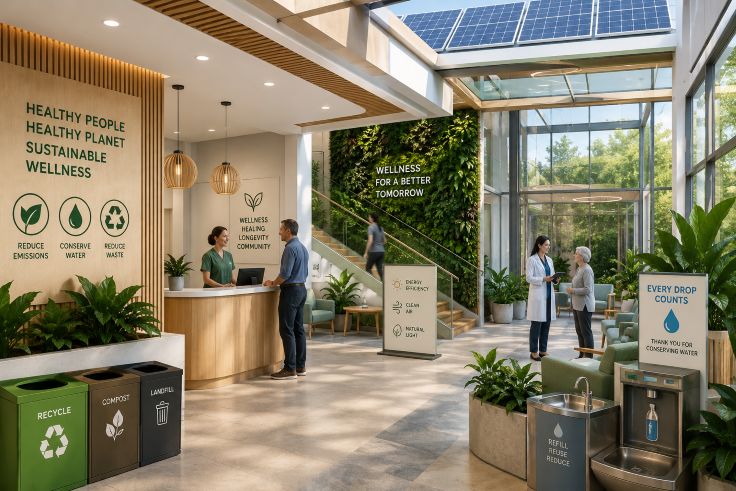
Healthcare facilities are responsible for a significant share of global environmental impacts. Research published by Health Care Without Harm and Arup estimates that the global healthcare sector accounts for approximately 4.4% of worldwide greenhouse gas emissions. As wellness centers, rehabilitation clinics, and preventive health facilities continue to expand, questions are growing about how these organizations can provide high-quality care while reducing their environmental footprint.
Modern wellness facilities increasingly recognize the connection between personal health and environmental sustainability. Industry observers examining contemporary wellness models, including facilities such as Apollo House longevity clinic, note that environmental considerations are becoming part of broader conversations about long-term health outcomes, operational efficiency, and responsible resource use. This shift reflects a growing understanding that healthy communities depend on both effective healthcare services and sustainable environments.
The Environmental Challenges Facing Wellness Facilities
Health and wellness centers face unique environmental challenges. Unlike many commercial buildings, they often operate for extended hours, maintain strict indoor climate requirements, and rely on specialized equipment that consumes substantial amounts of energy.
Data from the International Energy Agency (IEA) shows that buildings remain one of the largest contributors to global energy consumption. Within healthcare environments, energy demands can be even higher because facilities must maintain stable temperatures, proper ventilation, and air filtration systems to support patient safety and comfort.
Waste generation presents another challenge. Many healthcare settings produce disposable materials, packaging, cleaning supplies, and equipment-related waste. While strict sanitation standards remain essential, the volume of resources consumed can create environmental pressures when waste management strategies are not carefully planned.
Water consumption also deserves attention. Wellness centers frequently use water for sanitation, hydrotherapy services, laundry operations, and facility maintenance. As water scarcity becomes a concern in many regions, efficient water management is becoming increasingly important.
Resource-Intensive Operations and Their Impact
Climate control systems often represent one of the largest sources of energy consumption in health-related facilities. Patients, visitors, and staff require comfortable indoor environments throughout the year, making heating, ventilation, and air conditioning systems critical operational components.
Research from the U.S. Department of Energy indicates that HVAC systems can account for a substantial portion of a commercial building’s energy use. In healthcare settings, additional air exchange requirements and filtration standards can further increase energy demand.
Specialized wellness equipment adds another layer of resource consumption. Diagnostic devices, therapeutic technologies, monitoring systems, and treatment equipment may operate throughout the day. While these technologies support patient care, they also contribute to overall energy usage.
Lighting requirements can be extensive as well. Examination rooms, treatment spaces, fitness areas, and administrative offices often require consistent illumination. Older lighting systems may consume significant electricity, especially when facilities operate beyond standard business hours.
The challenge is not simply reducing consumption. Wellness organizations must balance environmental goals with patient safety, comfort, and clinical effectiveness.
Emerging Sustainability Practices in the Wellness Industry
Many health and wellness facilities are exploring strategies that reduce environmental impacts without compromising service quality. Energy-efficient technologies are among the most widely adopted solutions.
LED lighting systems, smart building controls, and energy-monitoring platforms allow facilities to track and optimize electricity use. Studies from the U.S. Environmental Protection Agency (EPA) show that energy-efficient lighting can significantly reduce electricity consumption while maintaining performance standards.
Renewable energy adoption is also increasing. Some wellness centers have incorporated solar energy systems to offset a portion of their electricity needs. While implementation varies by location and facility size, renewable energy investments can help reduce long-term operational emissions.
Water conservation measures are becoming more common as well. Low-flow fixtures, water-efficient landscaping, and improved monitoring systems help facilities identify opportunities to reduce unnecessary consumption. Experts at the World Resources Institute note that water efficiency strategies can generate both environmental and operational benefits.
Waste reduction initiatives are also evolving. Recycling programs, responsible procurement practices, and efforts to minimize single-use materials where appropriate are becoming more visible throughout the healthcare and wellness sectors.
The Role of Efficient Facility Design
Building design plays a major role in determining a facility’s environmental performance. Decisions made during planning and construction can influence energy use, water consumption, indoor environmental quality, and maintenance requirements for decades.
Architects and sustainability specialists increasingly promote designs that maximize natural daylight. Research published by the National Renewable Energy Laboratory suggests that daylighting strategies can reduce lighting-related energy consumption while improving occupant comfort.
High-performance building envelopes also contribute to efficiency. Improved insulation, energy-efficient windows, and thoughtful building orientation help maintain indoor temperatures while reducing dependence on mechanical climate control systems.
Many modern wellness facilities are exploring sustainable construction materials with lower environmental impacts. Responsible sourcing, recycled materials, and products designed for durability can contribute to long-term sustainability goals.
Indoor environmental quality remains a priority. Sustainable design does not focus solely on reducing resource use. It also aims to create healthier indoor spaces through improved ventilation, low-emission materials, and access to natural light.
Responsible Resource Management Beyond Construction
Even the most efficient building requires ongoing management to achieve sustainability goals. Operational practices often determine whether environmental targets translate into measurable results.
Regular maintenance of HVAC systems, water infrastructure, and equipment helps improve performance while extending asset life. Preventive maintenance can reduce waste, lower operating costs, and improve reliability.
Staff engagement is another important factor. Sustainability initiatives tend to be more effective when employees understand organizational goals and participate in resource conservation efforts. Small behavioral changes, such as reducing unnecessary energy use and supporting recycling programs, can contribute to meaningful results over time.
Procurement policies also influence environmental performance. Selecting products with lower environmental impacts, reducing excessive packaging, and partnering with responsible suppliers can help wellness organizations align purchasing decisions with sustainability objectives.
READ ALSO: Eco-Friendly Practices in Korean Massage Clinics for Improved Health
Balancing Health Services with Environmental Responsibility
The wellness industry faces a complex challenge. Facilities must provide safe, comfortable, and effective care while managing environmental impacts associated with energy use, water consumption, and waste generation.
Fortunately, sustainability and health goals are increasingly aligned. Efficient buildings, responsible resource management, renewable energy adoption, and thoughtful operational practices can support both environmental and organizational objectives. Many preventive health centers, recovery facilities, and integrated wellness clinics are exploring ways to incorporate these principles into their long-term strategies.
The transition will not happen overnight, and no single solution addresses every environmental concern. However, evidence from sustainability research and healthcare operations suggests that meaningful progress is possible. As modern wellness providers continue to evolve, balancing patient well-being with environmental responsibility is likely to remain an important measure of long-term success.